


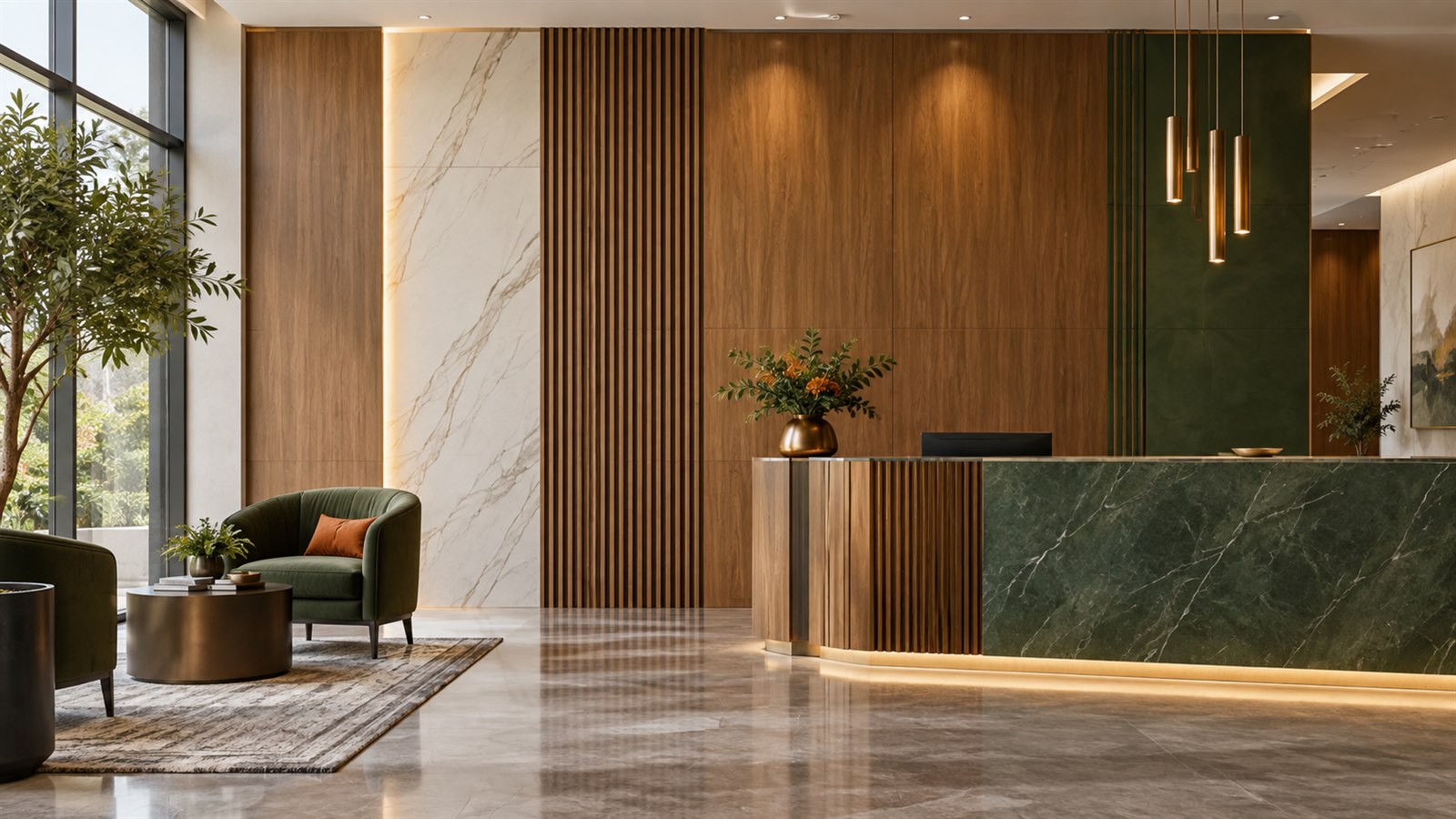
Decorative wall panels can establish the visual direction of a reception area, hotel room, office, retail space or residence. For a buyer, the first decision is not simply a colour. The panel needs to suit the intended surface, the design language, the installation method and the project specification. A clear brief also makes sample review and quotation much more efficient.
Start with the application and design direction
Define where the panel will be used and what it needs to contribute to the interior. A warm wood surface may suit a feature wall or furniture facing. A marble or stone effect may be more appropriate for a lobby, restaurant or commercial accent wall. Linear fluted profiles can add depth to reception areas, offices, hotels and residential interiors. For each area, note whether the design calls for a natural grain, a stone effect, a metal look, a solid colour or a linear profile.
- Feature walls and furniture surfaces: natural wood veneer panels can be discussed with different veneer species, substrates, dimensions and finishes.
- Broad decorative surfaces: bamboo charcoal fibre wall panels can be specified with wood grain, stone look, metal look or solid-colour designs.
- Marble and stone visuals: SPC marble wall panels offer a large-format decorative surface with pattern, colour and gloss level selected for the project.
- Textured and selected curved surfaces: flexible stone veneer or soft ceramic wall tile can be considered where the confirmed product and installation system suit the surface.
- Linear interior accents: WPC fluted wall panels can be matched by profile, colour, length, surface film and installation accessories.
Confirm the panel construction and surface
A visual reference is useful, but it does not replace a written material specification. Ask the supplier to confirm the substrate, face material, finish and available options for the chosen product. For example, a veneer panel may use a natural wood veneer with a customizable substrate, while a WPC fluted panel uses a wood plastic composite profile with a wood-grain film, solid colour or customized finish. Each combination should be reviewed against the intended application before ordering.
Surface direction should be described precisely. Instead of requesting only “oak” or “grey”, identify the grain direction, colour tone, texture, gloss or matte preference and any visual reference that needs to be matched. For stone-effect panels, identify the selected marble pattern, colour family and finish. This gives the supplier a practical basis for proposing a suitable option or preparing a sample.
Set dimensions and detail requirements early
Panel dimensions, thickness, edge details and installation accessories affect both the final appearance and the scope of supply. Many wall panel options can be customized, but the project should state the required wall area, panel orientation, preferred module size and any cuts around doors, electrical points or built-in furniture. For fluted panels, confirm profile dimensions and panel length. For large-format decorative sheets, confirm the required format and joint arrangement.
It is also helpful to list the accessories required with the panel system. Depending on the confirmed product, this can include trims, matching profiles or installation components. Keep these details together with the finish and panel size so that the quotation and sample review refer to the same configuration.
Use samples to align the final specification
A sample review should check more than the colour. Compare the selected surface, texture, sheen, edge and overall scale in the intended lighting and alongside nearby materials. If the project uses several decorative products, review them together so that wood tones, stone effects and solid colours feel coordinated. Record the approved sample, product description and agreed dimensions before production.
Prepare a complete inquiry
A useful inquiry names the product type, application, project location, required quantity, preferred dimensions, finish direction and required delivery packaging. Include drawings, material schedules or reference photos where available. Linyi Wangwang can discuss veneer species, substrates, profiles, surface designs, dimensions, finishes and packaging according to the confirmed wall-panel product and project requirements.